Catching corporate fraud: a Systems Intentionality approach

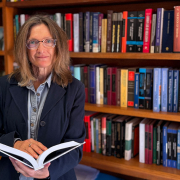
Understanding a person’s ‘state of mind’ is important when determining their legal responsibility for harmful acts. Historically, a corporation is treated as an artificial legal person under the law. But its ‘state of mind’ (such as intentions, knowledge, or recklessness) has been linked to individuals, such as directors or key employees. Professor Elise Bant is an expert in Private Law and Commercial Regulation at The University of Western Australia Law School. Her model of ‘Systems Intentionality’ has recently been adopted in the High Court of Australia, as a new and more effective way of determining how corporations ‘think’. This game-changing, world-leading Australian innovation provides a principled, practical and powerful way of holding corporations to account, for the benefit of humanity.
Advancing Nanomaterials from Lab to Market: Ablano’s Journey

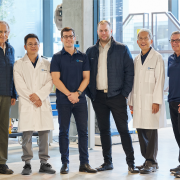
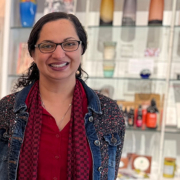
Ablano, a UWA spin-out, is pioneering the commercialisation of advanced nanomaterials to replace traditional materials in high-tech industries. Backed by Professor Hui Tong Chua’s research team, Ablano transforms precursor powders into few-layer graphene and boron nitride nano onions—powders that enhance strength and act as super lubricants. Their patented lamp ablation technology and access to UWA’s cutting-edge microscopy tools have accelerated progress. With a pilot facility, international patents, and nearly $4 million raised, Ablano is targeting aviation-grade lubricants and broader applications. Their collaborative model with UWA researchers exemplifies how open-access infrastructure can drive innovation from lab to market.

The art of mental wellbeing

Maintaining good mental health is a cornerstone of overall wellbeing. It plays a crucial part in fostering resilience, balance, and clarity, in shaping the way we think and feel, and the decisions we make in daily life. However, in Australia, around 1 in 5 adults and 1 in 7 young people experienced mental ill health each year. Dr Christina Davies at The University of Western Australia leads a team of researchers who are successfully promoting arts engagement as an effective way to enhance mental wellbeing.

Restoring the land by slaying weeds and flaming seeds

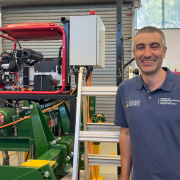
Associate Professor Andrew Guzzomi and his team at UWA’s Centre for Engineering Innovation develop innovative technologies to meet the challenges of restoring land and improving agriculture sustainability. Their comprehensive ecotech systems can effectively establish native plants, providing regulators and companies with greater confidence in the ecological restoration of these areas. In agricultural farming regions, the team’s mechanical weeding technologies combat herbicide resistant weeds with precision. Their solutions will deliver significant benefits for the environment and the economy, helping to grow food with less chemical exposure.

Unveiling the power of AI

Artificial intelligence (AI) is embedded in our daily lives. When we use social media, or our smartphones, our self-driving vehicles rely on them, in healthcare, and even when we use a search engine, we’re using the power of AI. All these technologies have made our lives easier and are constantly evolving.

Professor Ajmal Mian, at the UWA School of Physics, Maths and Computing is known internationally for his research in 3D computer vision, AI and machine learning. He and his team remain at the forefront of discovering novel algorithms and better model learning and training techniques and collaborate with multiple disciplines to find innovative solutions to meet their needs.

Trust your honey

Australian honey is one of the few honeys still collected from native bushland and forests and is considered some of the purest in the world. Additionally, due to our strict biosecurity measures, it is also free from most honeybee diseases negating the use of husbandry chemicals and antibiotics. Honey is claimed to be the third most adulterated food product, through the addition of syrups, and so it is important for producers, exporters and consumers, to have confidence in the quality of Australian honey bee products.

Fairness in the future of work

Emerging changes in technology, climate change, and the economy have placed pressure on the nature of work and on employment relations. UWA researcher Dr Caleb Goods and his team have increased social awareness of the conditions faced by gig economy workers and work with leading bodies to push for an equitable change. His research in the mining and manufacturing sectors aim to help workers and communities, the government, and industry fairly transition to a more sustainable future of work.

Prof. Tobar, a world-leading scientist in precision measurement.

Measuring with the highest precision

Precision measurement is critical for timing, electromagnetic and radio signals and underpins all measurement technologies. However, all electronics generate ‘noise’, which gets in the way of reading a pure signal.

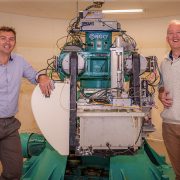
Professor Michael Tobar is a world-leading researcher in precision measurement and testing fundamental physics. He and his team at The University of Western Australia have developed low noise oscillators and devices that respond to signals much more sensitively. Their patented technologies are purchased globally for multiple applications from fundamental research, metrology, high-tech communications, radar and defence.

Comic Book Contracts

Comic Book Contracts

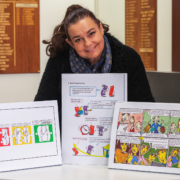
We enter into contracts all the time, without knowing it, but most people will admit to not reading or understanding the fine print. A collaborative team of researchers led by UWA Professor of Law, Camilla Andersen have found an alternative to navigating through paragraphs of legalese. They have created comic book contracts, which include a set of pictures with some text, designed to drive behaviour so that disputes do not arise. This exciting visual direction for legal contracts is also providing industry with time and money savings, whilst providing better access to justice for users.

TIDE is well placed to transform Australia’s offshore industry

Getting a grip on offshore pipelines

As offshore gas production facilities are turned on and off, the pipelines connecting the facility to the reservoir expand and contract. The result may be permanent axial movement of the pipeline, which puts stress on the structural members connected to it, and which must be appropriately engineered to avoid compromising the project. One approach to mitigating this pipeline ‘walking’ is the use a pipe-clamping mattress (PCM). Over the last year, the NGCF team have studied the behaviour of PCMs for three different offshore soil types, focusing on their ability to provide high restraint against walking over the operating life of a subsea pipeline. The outcomes of this research are being used in practice, with the objective to reduce cost without compromising performance.